Are Lilies Poisonous to Cats? – Important Information
Lilies are a popular flower in homes and gardens, and they are one of the most poisonous plants for cats. Even a small amount of exposure can cause serious health problems.
Key Takeaways
- Lilies are toxic to cats and can cause kidney failure.
- If you think your cat has come into contact with a lily, get veterinary care immediately.
- Keep lilies away from cats and choose safe plants for your home and garden.
Which Part of the Lily Is Poisonous to Cats
The entire lily plant is toxic: the stem, leaves, flowers, pollen, and even the water in a vase.
Most lilies contain an unidentified water-soluble toxin found in all parts of the plant.
The most dangerous lilies for cats include:
| Common Name | Scientific Name |
| Asiatic lily (including hybrids) | Lilium asiaticum |
| Daylily | Hemerocallis species |
| Easter lily | Lilium longiflorum |
| Japanese Show lily | Lilium speciosum |
| Oriental lily | Lilium orientalis |
| Rubrum lily | Lilium speciosum var. rubrum |
| Stargazer lily | Lilium ‘Stargazer’ – a hybrid |
| Tiger lily | Lilium tigrinum or lancifolium |
| Wood lily | Lilium philadelphicum or umbellatum |

Symptoms of Lily Poisoning in Cats
The first signs are vomiting, lethargy, drooling and loss of appetite. Increased urination and dehydration can show up 12 to 24 hours after ingestion and point to kidney damage. Later the kidneys may fail and stop producing urine, which is a life-threatening emergency.
Not every cat shows symptoms, and some don’t show them until several days after ingestion. If you think your cat has eaten any part of a toxic lily, get veterinary care immediately.
Immediate Actions and Veterinary Care

If you think your cat has eaten any part of a lily plant, go to the vet immediately. Early treatment is what prevents life-threatening complications such as kidney failure, seizures and death.
First Aid for Suspected Lily Ingestion
If you catch your cat eating a lily, remove any plant material left in its mouth and rinse the mouth with water. Do not induce vomiting unless a vet or animal poison control center tells you to, because in some cases it does more harm than good.
Diagnosis and Treatment Options
The vet will examine your cat and run bloodwork to check kidney function. If needed, they may induce vomiting or use decontamination procedures to remove plant material from the esophagus and stomach.
Treatment may include activated charcoal to absorb remaining toxins, intravenous (IV) fluids to keep your cat hydrated, and medication for signs such as vomiting and diarrhea.
Prognosis and Recovery
Recovery depends on how quickly treatment starts and how badly the kidneys are damaged. Irreversible kidney failure can occur within 24-72 hours of ingestion, so speed matters. Some cats recover with minimal kidney damage if caught early and treated aggressively. In severe cases, hemodialysis or peritoneal dialysis may be needed to support kidney function.
Watch your cat closely for signs of kidney damage: increased urination, loss of appetite, lethargy and swelling.
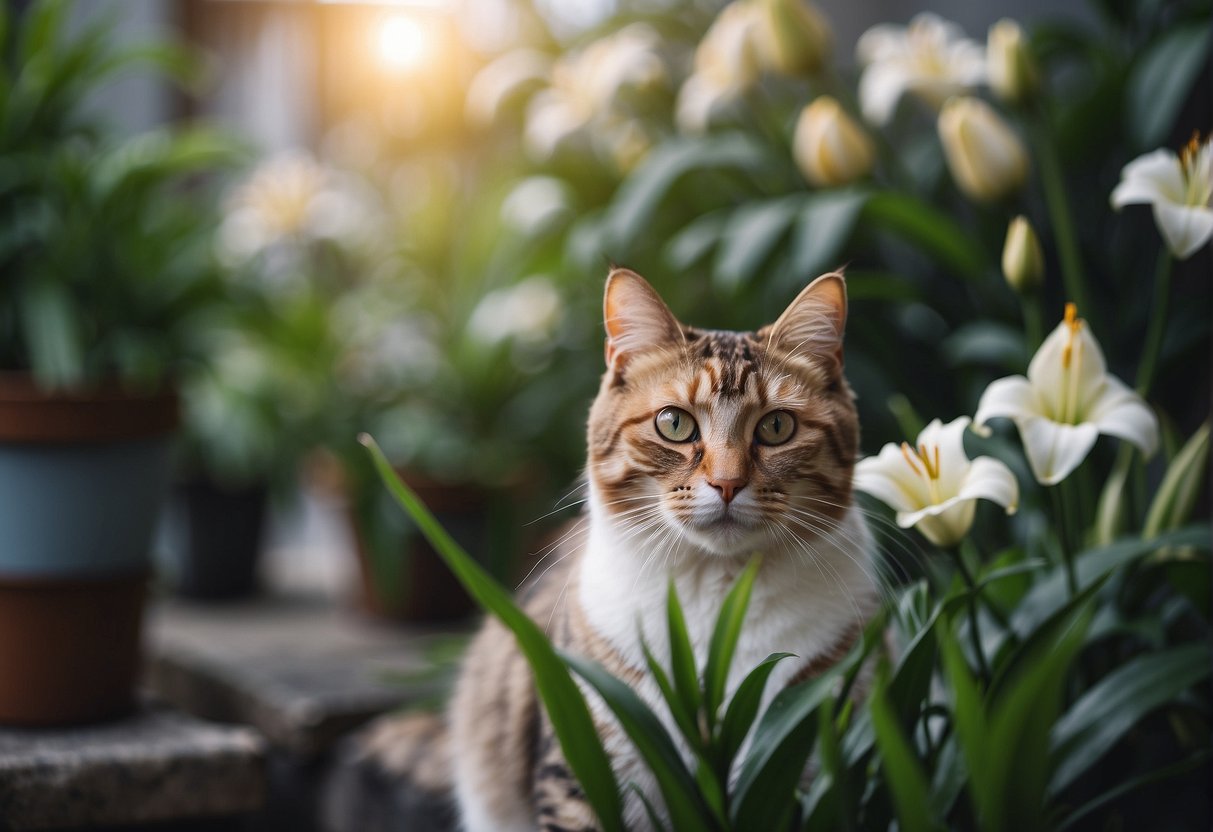
For concerns about lilies or other pet poisons, contact your vet or a poison helpline such as the Animal Poison Control Center or Pet Poison Helpline.
Prevention and Safe Alternatives
Preventing Lily Poisoning in Cats
The simplest prevention is to keep lilies out of your home and garden. If someone gives you a bouquet with lilies in it, remove them straight away and put them where your cat can’t get to them.
If you have lilies in the garden, fence that area off or keep your cat indoors in the spring when they bloom. If you think your cat has eaten any part of a lily, contact your vet immediately or call the Pet Poison Helpline at 1-855-764-7661.
Non-Toxic Plants for Cat-Friendly Homes
Plenty of plants are safe for a home with a cat. Cat-friendly options include spider plants, Boston ferns and African violets.
Non-toxic doesn’t mean harmless, though. Eating a lot of any plant can still upset a cat’s digestion, so if yours likes to chew plants, keep them all out of reach. If you’re unsure about a plant, ask your vet.

Frequently Asked Questions
What are the symptoms of lily poisoning in cats?
Vomiting, loss of appetite, lethargy, dehydration and kidney failure. Early symptoms may appear within a few hours of ingestion. If you think your cat has eaten any part of a lily, see a vet immediately.
Which flowers, besides lilies, are harmful to cats?
Several, including tulips, daffodils, azaleas and chrysanthemums. Keep them out of your cat’s reach, or don’t have them in the house.
Can lilies poison a cat even without ingesting them?
Not eating the plant doesn’t make it safe. Pollen can rub off onto a cat’s fur as they brush past, and they swallow it when they groom. The water in a vase of lilies can also be toxic.
What should I do if my cat ingests part of a lily?
Go to the vet immediately. Early treatment can prevent kidney failure and improves the chances of recovery.
Are there any lily varieties that are safe for cats?
No. All lily varieties are toxic to cats, and even small amounts of pollen or plant material can be deadly.
Is it safe to have any lilies in a home with cats?
No. If you want flowers in the house, choose cat-safe varieties such as roses, sunflowers or snapdragons.