Leaving your cat behind while you embark on a vacation can be a stressful experience filled with worry about your feline friend’s wellbeing.
Whether you’re away for a weekend or a more extended break, understanding how to care for your cat in your absence is crucial for your and your pet’s peace of mind.
Key Takeaways
- Consider care options that provide safety and comfort for your cat during your holiday.
- Prepare food, water, and a secure environment to prevent anxiety and mishaps.
- Plan your departures and returns in a way that eases your cat’s stress and maintains their routine.

Preparing your cat for your absence is more than securing a pet sitter or booking a stay at a cat kennel. It involves considering your cat’s health, safety, and emotional wellbeing.
Ensuring your cat has the proper nutrition and hydration, creating a safe environment, and putting measures in place to minimize separation anxiety are essential. A well-thought-out plan can help prevent disrupting their routine and ensure they remain happy and healthy until you return.
Table of Contents
- Choosing the Right Cat Care Option
- Preparing Your Cat for Your Absence
- Ensuring Proper Nutrition and Hydration
- Health and Safety Considerations
- Minimizing Separation Anxiety
- Home Safety and Security
- Leaving for Holiday: Last-Minute Checklist
- Post-Holiday Reunion
- Frequently Asked Questions
Choosing the Right Cat Care Option
When planning a vacation, selecting a suitable care option for your cat is crucial. You want to ensure they’re safe and comfortable and maintain their routine in your absence. Consider these options for peace of mind while you’re away.
Leaving Your Cat at Home
If you leave your cat at home, consider enlisting a trusted neighbor, friend, or family member to check on your pet.
They should be familiar with your cat’s feeding times, manage the litter box, and provide some much needed fuss and attention.
For a more professional touch, hiring a pet sitter ensures your cat stays on their regular schedule and receives one-on-one care.
Using a Professional Cat-Sitting Service
A professional cat-sitting service offers the benefit of experience and often additional services such as grooming or extended playtime.
Your cat remains in their environment, which minimizes stress, and you benefit from the sitter’s expertise in cat care, ensuring your cat’s needs are professionally managed.
Boarding Facilities Pros and Cons
Opting for a boarding cattery or cat boarding facility can be a great choice if your cat is social and adaptable.
Boarding facilities often feature various amenities, from private suites to communal play areas.
However, consider that boarding can be stressful for some cats, and weighing the pros and cons is important.
Check the facility’s cleanliness, security, and the staff’s approach to monitoring each cat’s well-being.
Preparing Your Cat for Your Absence
Ensuring your cat’s stability and happiness while you’re away starts with careful preparation. You can minimize the stress for both you and your furry friend by focusing on three key areas: their environment, routine, and comfort items.
Creating a Comfortable Environment
Adjust the Thermostat: Keep your home at a temperature your cat is accustomed to. If it’s summer, crack open window vents or set the air conditioning to activate if it becomes too warm. Ensure your home stays warm enough during winter, especially for bedding areas.
Secure Their Space: Confirm that all potentially dangerous items are out of reach and that your cat has ample space to retreat to for safety and comfort. You may consider leaving a scented item, like a piece of your worn clothing, to provide security in your absence.
Maintaining a Routine
Feeding Schedule: Continue with the usual feeding routine. An automatic feeder may be useful to keep meal times consistent if a pet sitter can’t adhere strictly to your cat’s schedule. Include familiar treats as a bonus to maintain normalcy.
Quality Time: Arrange for someone familiar to spend time with your cat, maintaining periods of attention and play. This will help mitigate feelings of abandonment and maintain their social needs. Give clear instructions on your cat’s favorite toys and games to your sitter, ensuring they feel entertained and loved.
Providing Familiar Comforts
Toys and Bedding: Leave your cat’s favorite toys readily available. Place their bedding in its usual spot or where your cat most enjoys sleeping. The scent and familiarity of these items can greatly ease their discomfort during your absence.
Personal Items: A scented item, such as a shirt that smells like you, can comfort your cat while you’re away. Place it in a favored spot where your cat likes to relax and sleep.
By focusing on these specifics, your preparations will create a supportive environment. Your cat will feel safer and more at ease, which benefits their well-being until you return.
Ensuring Proper Nutrition and Hydration
Proper nutrition and hydration are vital for your cat’s health, especially when you’re away. Planning is key to ensure that your cat receives the right amount of food and fresh water daily.
Feeding Schedule
You should establish a consistent feeding schedule aligning with your cat’s routine. Cats typically need to be fed twice daily, so setting specific meal times will help maintain their regular eating habits. Use portion control to prevent overeating.
Using An Automatic Cat Feeder
An automatic pet feeder can be invaluable when you can’t be there to feed your cat in person.
Choose a feeder that allows you to schedule meal times and control portion sizes.
This will ensure your cat gets the right amount of food at the right times.
Clean Water Supply
Your cat’s access to fresh water is just as important as food.
Leave multiple water bowls in different locations to encourage your cat to drink regularly.
Consider a water fountain to keep water fresh and encourage hydration, which is crucial as cats are prone to urinary tract issues.
Health and Safety Considerations

When planning a holiday, ensuring your cat’s health and safety in your absence is paramount. You’ll need to manage medications effectively and be prepared for emergencies, always keeping your cat’s well-being in focus.
Dealing with Medications
If your cat is on any medication, consistent administration is crucial.
Contact your veterinarian to confirm the dosage and schedule. For peace of mind, it may be helpful to write down the instructions.
Consider using a pill organizer or setting a reminder for the cat sitter. It’s important to provide your cat caregiver with your vet‘s contact information and details on how and when to administer the medications.
Emergency Preparedness
Create a detailed plan for potential emergencies.
Ensure that your cat’s caregiver has the contact information of your veterinarian and the nearest animal emergency clinic. Leave a signed vet release form authorizing treatment in case you cannot be reached.
Ensure the caregiver is aware of any medical conditions or allergies your cat has and knows where to find the medication and medical records.
Minimizing Separation Anxiety

When planning a holiday, it’s understandable to be concerned about leaving your cat behind, as it can be a stressful experience for both you and your pet. Maintaining a familiar environment and routine is key to reduce separation anxiety in cats.
- Maintain Routine: Keep feeding and playtime schedules consistent. If changes are needed, introduce them slowly.
- Comforting Presence: Leave a piece of clothing with your scent to provide comfort.
- Mental Stimulation: Provide toys that stimulate their instincts and keep them occupied.
Before departing, increase playtime to tire out your cat and lessen anxiety. Introduce new forms of entertainment like feeding puzzles that can keep your cat busy during your absence.
Even when away, you can ensure your cat feels your attention:
- Automated Feeders: Consider using automatic feeders to keep meal times regular.
- Familiar sounds: Leave a radio on a talk station or play a recording of your voice.
Professional care can also be a solution. Assess pet hotels or in-home pet sitters that can provide personalized attention and care during your time away. Always visit the facility beforehand to ensure a calm and safe environment.
Remember, preparations to ease separation anxiety start well before you leave. Gradually get your cat used to being alone and the measures you’ve put in place.
This thoughtful approach can help you and your cat enjoy a stress-free time apart.
Home Safety and Security

When leaving your indoor cat alone while you’re on holiday, prioritizing home safety and security is crucial. Here are key measures:
- Secure All Entrances: Check doors, windows, and cat flaps to ensure they are closed and locked. This prevents your cat from escaping and keeps uninvited guests out.
- Safe Hiding Spots: Cats often seek secluded areas to hide. Before you leave, create safe hiding places where your cat can retreat to feel secure without getting trapped or endangered.
- Avoid Hazards: Remove or secure any items that could harm your cat, such as toxic plants, small objects, or electrical cords they might chew on.
- Controlled Climate: Ensure your home’s temperature is safe and comfortable for your cat. Leave your heating or air conditioning on a timer or regulated via a smart thermostat.
- Update Identification: Double-check that your cat’s microchip information is up to date, and they have a collar with identification, in case they slip out.
- Monitoring Systems: Consider installing a camera or monitoring system. This allows you or a cat sitter to check in on your cat and ensure their well-being from afar.
- Emergency Contacts List: Leave a list of emergency contacts, including your vet’s number and accommodation details, with your cat sitter or neighbor.
Remember, your peace of mind and your cat’s safety are paramount when you’re away. Taking these steps will help ensure a secure environment for your pet during your absence.
Leaving for Holiday: Last-Minute Checklist

Before you leave for your holiday, there are crucial steps to ensure your cat’s comfort and safety. Your cat relies on routine and familiar surroundings, so keeping their environment stable while you’re away is key.
Final Cat Sitter Instructions
Litter Trays: Confirm with your cat sitter the location of all litter trays and the frequency of cleaning each one. If you have multiple cats, explain that each cat may prefer their tray.
- Litter Type: Specify the type of litter your cat is accustomed to and show your sitter where extra supplies are kept.
- Cleaning Tools: Point out the scoop, liners, and waste receptacles.
Feeding Schedule: Leave detailed written instructions about your cat’s feeding routine, including the type and amount of food and feeding times.
- Food Storage: Show where you store the food and how to seal it to maintain freshness.
- Dietary Restrictions: Note any dietary restrictions or medications that must be administered.
Travel Day Preparations
Suitcase: Pack your suitcase a day in advance to minimize last-minute rushing and stress that your cat can sense.
- Packing Area: Keep your suitcase closed to prevent your cat from climbing in and potentially getting shut inside.
Carrier: If your cat needs to be relocated on your travel day, ensure the carrier is comfortable with familiar blankets or toys.
- Familiarization: Place the carrier in the living area a few days before to allow your cat to explore and sit in it at their leisure.
- Secure Transport: Check that the carrier locks securely to prevent escapes during travel.
Remember, these preparations are not just for your peace of mind but essential for your cat’s well-being while you’re away.
Post-Holiday Reunion
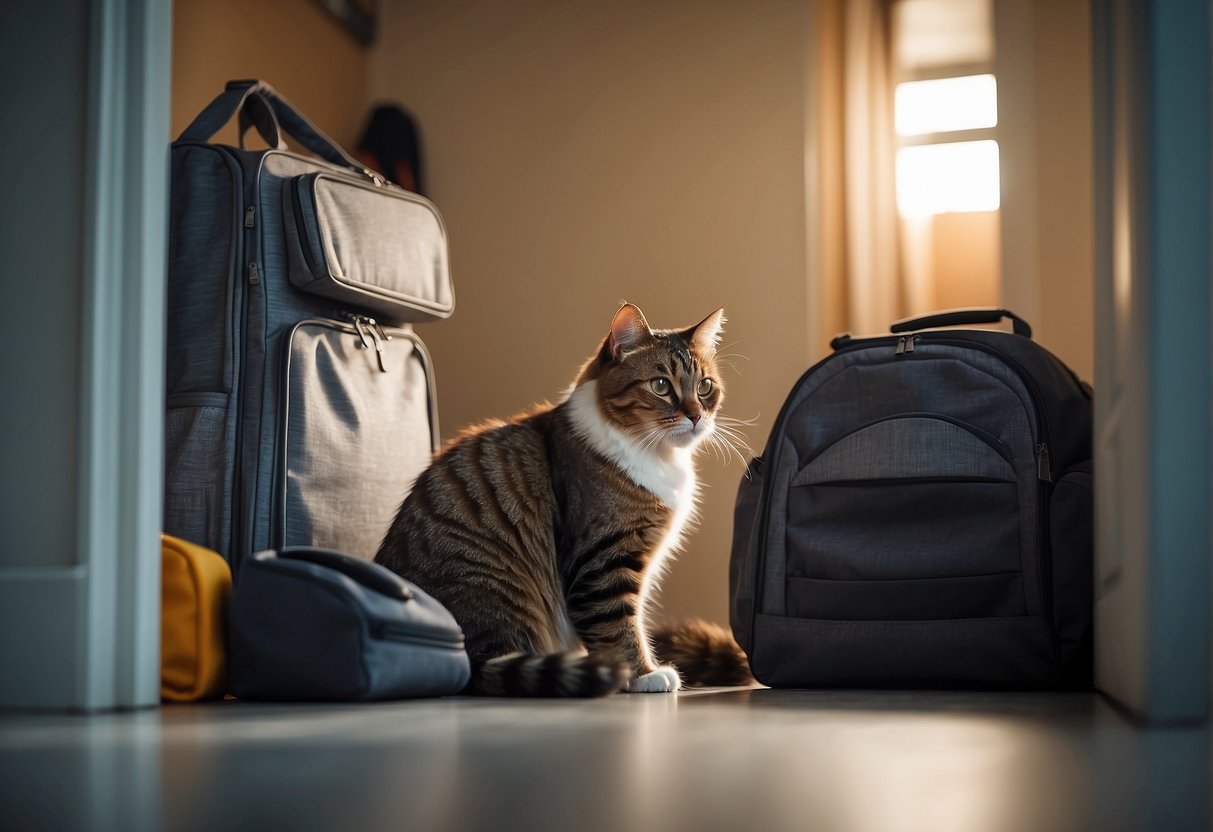
Returning from a holiday requires attention to your cat’s need for stability and understanding of any changes in their behavior. Your cat may have felt stress in your absence, and reestablishing normalcy is key.
Reestablishing Routine
Your priority is to reinstate the daily routine that your cat is accustomed to. Cats are creatures of habit, and maintaining a consistent schedule for feeding, playtime, and attention helps reduce their stress levels and makes them feel secure.
- Feeding: Resume feeding at the usual times.
- Play: Engage in regular play sessions to rekindle your bond.
- Comfort: Provide familiar comforts like their favorite blanket or toy.
Noticing Behavioral Changes
After a holiday, it’s important to be alert for any behavioral changes that might indicate stress or discomfort. Signs can vary, but look for:
- Unease or hiding more than usual
- Changes in appetite or litter box habits
If you notice significant changes, consider contacting a vet for advice.
Remember that cats often need some time to adjust once you return.
Patience and awareness are your best tools in ensuring a smooth post-holiday reunion with your feline friend.
Frequently Asked Questions

When planning a holiday, ensuring your cat’s happiness and safety is a top priority. Address your concerns with these frequently asked questions to keep your feline friend content while you’re away.
How can I ensure my cat is well taken care of while I’m on holiday?
To ensure your cat is well taken care of, consider hiring a professional pet sitter who can maintain your pet’s routine or ask a trusted friend to provide care. Leave detailed instructions for feeding, grooming, and any medications.
Are cats able to cope alone during a short-term vacation?
Cats are generally independent but shouldn’t be left alone for more than 24-48 hours. For short-term vacations, ensure they have sufficient food, water, and a clean litter box.
What is the best option for my cat’s care during a 2-week absence?
For a 2-week absence, boarding at a professional cattery or having a cat sitter stay at your home are great options to maintain your cat’s environment and routine.
Can my cat experience separation anxiety when I travel?
Yes, cats can experience separation anxiety, manifesting as changes in behavior. Consistency from a caregiver can help mitigate stress.
Is it better to have a friend look after my cat or board them when I travel?
The decision between having a friend look after your cat or boarding depends on your cat’s personality. Some prefer the comfort of their home while others might adjust well to a reputable boarding facility.
How often should a cat sitter visit when I’m away for a week?
A cat sitter should visit at least once daily for food, water, and litter box cleaning. If your cat enjoys company, consider a sitter who can provide additional companionship and playtime.